In the Regency era, elopement was a dramatic and often scandalous way for couples to marry against the wishes of their families. One of the most famous destinations for runaway couples was Gretna Green, a small village in Scotland just across the border from England. Gretna Green became synonymous with romantic rebellion, offering a legal loophole for couples seeking to marry quickly and without parental consent.
The Appeal of Gretna Green
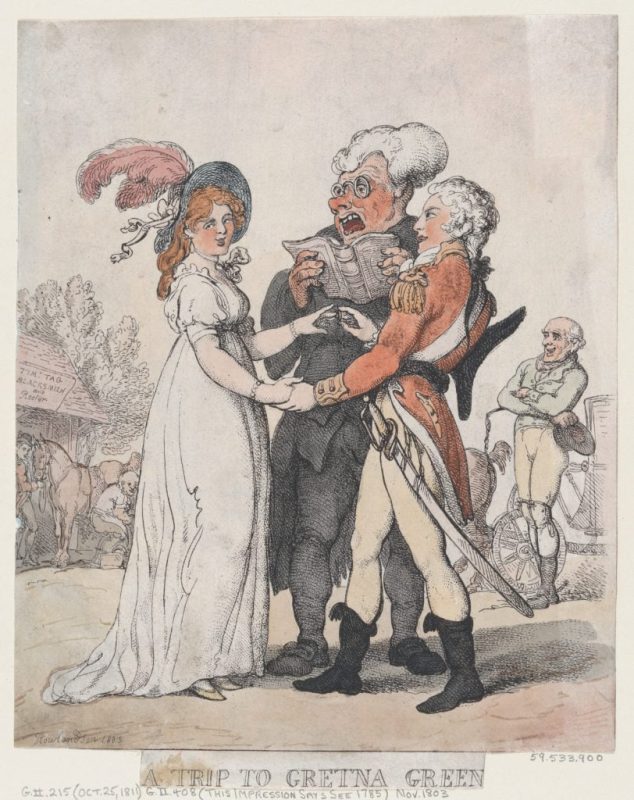
Gretna Green’s popularity as a destination for elopements stemmed from differences between English and Scottish marriage laws. In England, the Marriage Act of 1753 required couples under the age of 21 to obtain parental consent before marrying. In Scotland, however, the legal age for marriage was 16 for men and 12 for women, and no parental consent was required. Additionally, Scottish law allowed for ‘irregular marriages,’ which could be performed by simply declaring oneself married in front of witnesses.
This legal flexibility made Gretna Green an attractive option for young couples facing opposition from their families. The village’s proximity to the English border made it easily accessible, and its blacksmiths, who often performed the ceremonies, became known as ‘anvil priests.’ The romantic image of couples fleeing to Gretna Green captured the public’s imagination and became a recurring theme in literature and folklore.
The Drama of Elopement
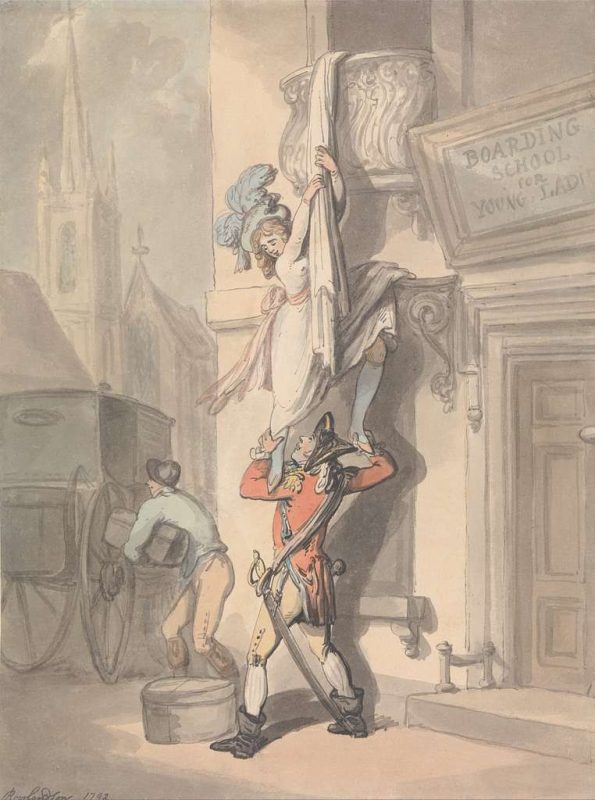
Elopement was not without its risks and challenges. Couples often had to travel long distances, sometimes pursued by angry relatives or hired agents. The journey itself could be fraught with danger, particularly for young women, who risked their reputations by running away with a lover. Despite these challenges, many couples saw elopement as their only chance to be together, particularly if their families disapproved of the match for financial or social reasons.
The marriages performed at Gretna Green were often hasty and informal, but they were legally binding. This made them a powerful tool for couples determined to defy societal expectations and take control of their own destinies.
The Legacy of Gretna Green
Gretna Green remains a symbol of romantic rebellion and the enduring appeal of love stories. The village has become a popular tourist destination, with visitors flocking to see the famous blacksmith’s shop where so many couples exchanged vows. The legacy of Gretna Green’s elopements lives on in literature, film, and popular culture, where it continues to inspire tales of love and defiance.
Conclusion
Gretna Green and the phenomenon of fashionable elopements were a fascinating aspect of Regency-era society, reflecting the tension between individual desires and societal expectations. These runaway marriages were a testament to the power of love and the lengths to which people would go to secure their happiness. The story of Gretna Green remains a poignant reminder of the enduring appeal of romance and rebellion.
References for Further Reading:
- What Did it Mean to Elope in the Regency Era?
https://prideandprejudicethennow.home.blog/1000-adaptations/blog/830-annotations/what-did-it-mean-to-elope-in-the-regency-era/ - Why Did Regency Lovers Elope to Gretna Green?
https://www.regencyhistory.net/blog/regency-why-did-lovers-elope-gretna-green

Leave a Reply