It’s easy to assume that bouquets have always just been about pretty blooms and pleasant scents. But in the Regency era, a small handheld bouquet could carry far more than fragrance — it could carry meaning, emotion, even scandal. Enter the tussie-mussie: a charming little arrangement that, to the well- informed, spoke volumes.
From Scent to Sentiment
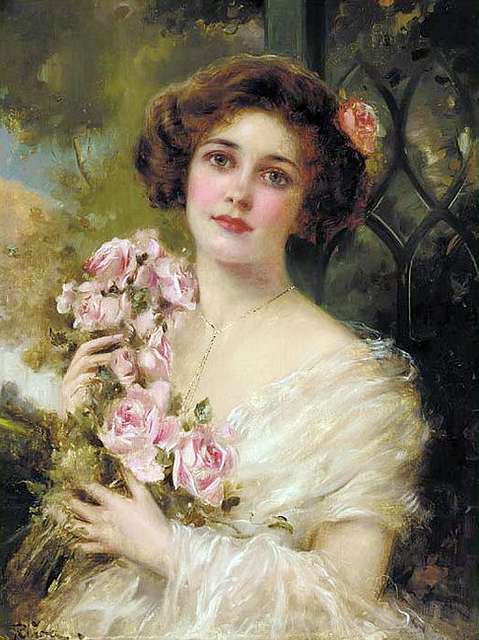
The tussie-mussie (also sometimes called a nosegay) had humble beginnings. In medieval times, these tightly packed bunches of herbs and flowers were meant to mask unpleasant odours and ward off illness — no small feat, given the state of sanitation then. Fast forward to the Regency era, and the nosegay had bloomed into a fashionable form of floriographic expression.
At a time when saying certain things aloud might be deemed quite improper, especially in matters of the heart, people turned to the language of flowers — or floriography, as it was called. Each bloom had its own meaning, and if you knew the code, a simple bouquet could whisper sweet nothings (or stern warnings) without a single word spoken.
A Bouquet With Purpose
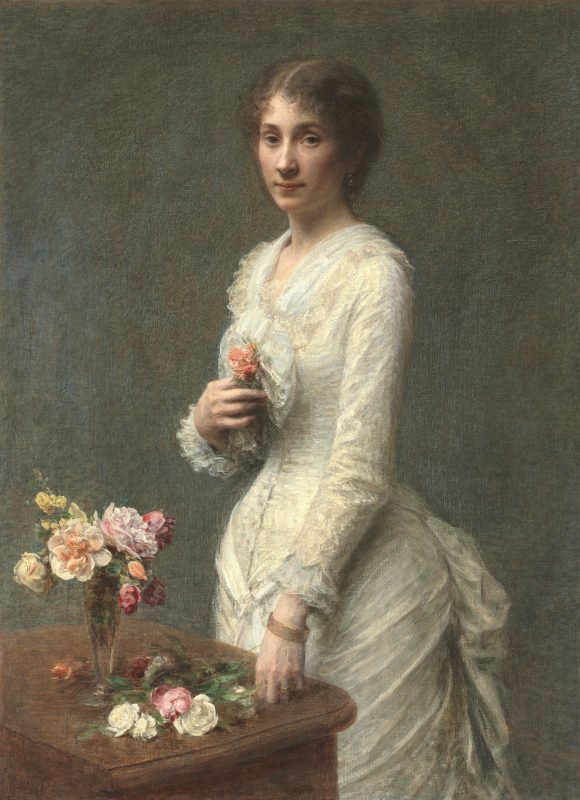
A typical tussie-mussie was a compact, round bouquet made with care and intention. The stems were often tucked into a cone-shaped holder — crafted from lace, delicate paper, or even silver filigree — and might be tied with ribbon or adorned with tiny charms. But it was the choice of flowers that truly mattered.
Roses, of course, were the obvious romantic favourite — though even those had nuance. Red for passion, pink for admiration, white for pure love… and heaven help you if someone sent you yellow (jealousy!). Lavender suggested loyalty, rosemary recalled memory, thyme spoke of courage, and basil? Best not to include it unless you meant to express hatred.
Even how the flowers were arranged within the tussie-mussie could be meaningful — turned upright for agreement, reversed for rejection. It was a delicate, scented chess game of the heart.
More Than Just Romance
While tussie-mussies often played a starring role in courtship, they weren’t limited to romantic messages. Sympathy, gratitude, encouragement — even veiled criticism — could all be expressed with the right floral combination. A bundle of marigolds and yarrow might comfort the grieving. A mix of sage (wisdom) and oak leaves (strength) might embolden a friend facing difficulty.
In a society where decorum reigned and emotions were rarely shouted from rooftops, the tussie-mussie offered a whisper of the heart, wrapped in petals and tied with ribbon.
A Fading Fragrance
Like many charming customs of the Regency, the tussie-mussie eventually faded from daily life. The arrival of the Victorian era brought with it an explosion of florid (and sometimes overwrought) sentiment, while telegrams and later, telephones, offered faster ways to say what one meant — though arguably with far less charm.
Still, the language of flowers hasn’t vanished entirely. We may not exchange tussie-mussies at balls anymore, but we still give flowers when words feel too much — or too little.
In Conclusion
The Regency tussie-mussie was more than a bouquet; it was a coded message, a delicate expression of feeling, and a perfect example of the era’s blend of beauty, sentiment, and social grace. Perhaps it’s time we brought them back — who wouldn’t enjoy a nosegay that said exactly what you meant, without saying a word?
References for Further Reading:
- The Secret Language of Bouquets: Tussie-Mussies — A Botanical History
https://medium.com/plant-based-past/the-secret-language-of-bouquets-tussie-mussies-a-botanical-history-e82e65885a26 - Nosegay
https://en.wikipedia.org/wiki/Nosegay

Leave a Reply