In Regency England, gentlemen’s clubs like White’s and Brooks’ were the epicentres of elite male social life. These exclusive establishments were more than just places to drink and dine; they were hubs of gambling, political intrigue, and networking. For the gentlemen of the era, membership in one of these clubs was a mark of status and influence.
The Origins of Gentlemen’s Clubs
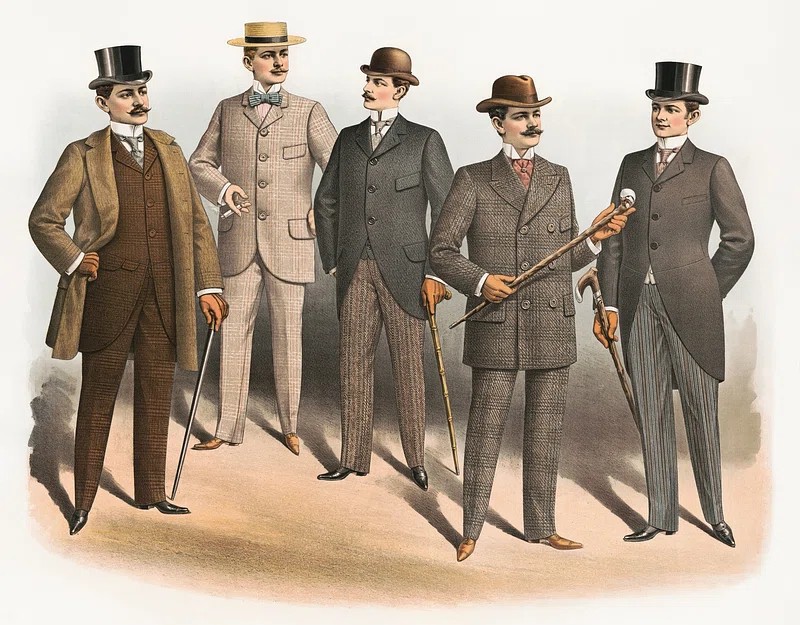
Gentlemen’s clubs emerged in the 18th century as private spaces where men of similar social standing could gather away from the prying eyes of society. By the Regency era, clubs like White’s and Brooks’ had become synonymous with the lifestyle of the rake—a wealthy, fashionable man who lived for pleasure and excess.
White’s, founded in 1693, was the most prestigious of these clubs. Its famous bow window was occupied by the ‘Beau Monde,’ a group of influential men who set the tone for fashion and politics. Brooks’, established in 1764, was known for its Whig affiliations and high-stakes gambling.
Gambling and Excess
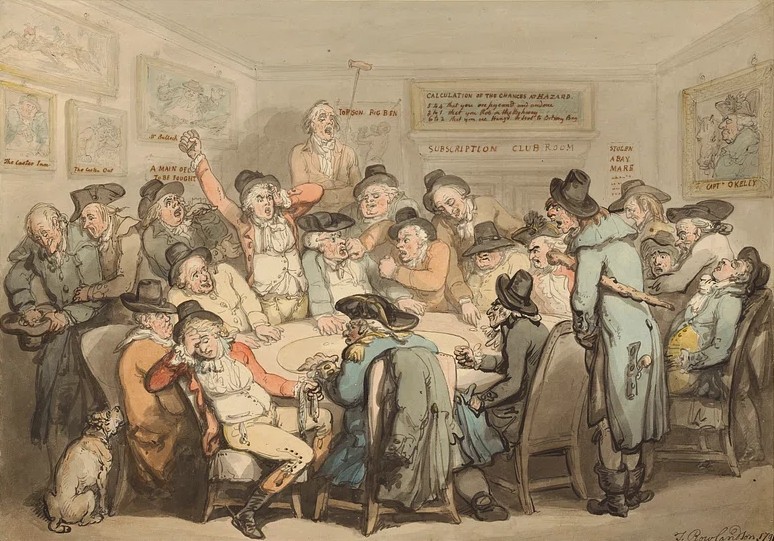
Gambling was a central activity at these clubs, with games like faro, whist, and hazard attracting huge sums of money. The stakes were often ruinously high, and many men lost their fortunes in a single night. The Prince Regent himself was a notorious gambler, and his debts were a source of constant scandal.
The clubs were also known for their lavish dinners and drinking sessions, which often lasted late into the night. These gatherings were a way for men to bond and assert their dominance within the social hierarchy.
Political Influence
Beyond their social functions, gentlemen’s clubs played a significant role in politics. Members used the clubs to discuss policy, form alliances, and negotiate deals. Brooks’, in particular, was a centre of Whig politics, while White’s was associated with the Tories.
The clubs were also a place where young men could learn the art of politics from their elders. For ambitious rakes, membership in a prestigious club was a stepping stone to a career in public life.
The Legacy of Gentlemen’s Clubs
The tradition of gentlemen’s clubs continues to this day, though their influence has waned. The Regency-era clubs remain a symbol of a bygone era, when wealth, power, and privilege were concentrated in the hands of a few.
Conclusion
The Regency gentlemen’s clubs were more than just social venues; they were institutions that shaped the political and cultural landscape of the era. Their legacy endures as a reminder of the excesses and intrigues of Regency high society.
References for Further Reading:
- The History of Gentlemen’s Clubs
https://www.historic-uk.com/CultureUK/Gentlemens-Clubs/ - The Fascinating Story of Gentleman’s Clubs
https://cobaltfairy.com/blog-post/fascinating-story-gentlemens-clubs/ - Gentleman’s Club
https://en.wikipedia.org/wiki/Gentlemen%27s_club

Leave a Reply