In an age defined by elegance and inquiry, few curiosities captured the Regency imagination quite like the automaton. These mechanical wonders—birds that sang, dolls that danced, machines that wrote with uncanny grace—were more than novelties. They were living theatre made of brass and gears, miniature spectacles that delighted parlours and palace halls alike. The automaton was not merely a toy of the elite—it was a testament to the period’s restless pursuit of beauty, precision, and the limits of possibility.
Wound with Wonder: A Brief History
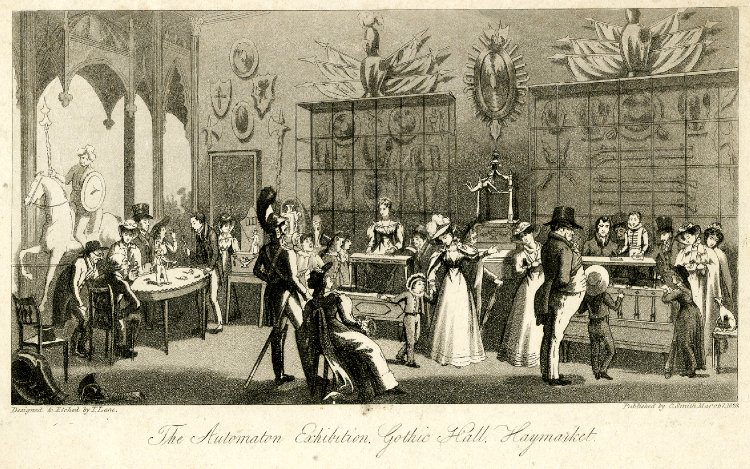
Though the idea of lifelike machines had enchanted minds since antiquity, it was the artisans of the 18th and early 19th centuries who brought automata to exquisite fruition. Master craftsmen such as Pierre Jaquet-Droz and Henri Maillardet produced devices that could draw, play instruments, and even compose elegant script. These creations did not merely perform—they performed with grace. Displayed in royal courts and bustling exhibition halls, they stood as marvels of engineering, storytelling, and human ambition.
More Than Machinery
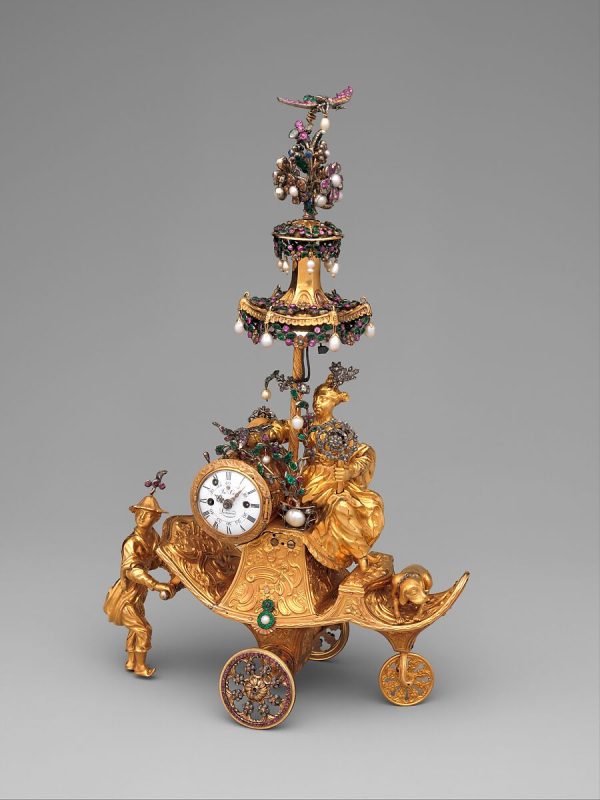
To the Regency viewer, an automaton was not just clever—it was enchanting. Take the famed Silver Swan, crafted by John Joseph Merlin: at the turn of a key, the bird bowed, rippled its silver plumage, and seemed to drift serenely on mirrored waters. Such illusions were no small feat. Behind each lifelike gesture was a symphony of gears, cams, and springs, orchestrated with almost invisible precision.
Automata blurred the lines between art and science, drawing admiration from natural philosophers and fashionable society alike. They stirred philosophical musings as easily as applause. If a machine could imitate life so convincingly, where did the soul begin? Could intelligence be constructed? Such musings would echo into literature—most famously in Mary Shelley’s Frankenstein, where man’s attempt to animate matter leads to chilling consequences.
Legacy in Motion
Though the age of automata eventually gave way to new technologies—steam, electricity, and later, computing—their legacy lingers. In today’s robotics, artificial intelligence, and kinetic sculpture, one can trace a straight line back to the clockwork creations that once fascinated Regency drawing rooms.
Automaton-makers, with their marriage of mechanical skill and artistic vision, laid the groundwork for how we imagine and build machines to this day. Theirs was a language of levers and longing, of gears turned by human curiosity.
In Conclusion
The Regency era’s love affair with automata was more than a passing fascination—it was a reflection of the age’s greatest ambitions. In these glittering, whirring wonders, society glimpsed not only what man could build, but what he might become. Part marvel, part mystery, the automaton remains a symbol of an era captivated by the delicate dance between the natural and the artificial—and ever willing to be astonished.
References for Further Reading:
- Maillardet’s Automaton Is a Marvel of 19th-century Robotics
https://science.howstuffworks.com/maillardets-automaton.htm - Automaton
https://en.wikipedia.org/wiki/Automaton - Regency Science and Technology: Maillardet’s Automaton
https://regrom.com/2018/11/28/regency-science-and-technology-maillardets-automaton/

Leave a Reply