In the Regency era, word games and linguistic play were popular forms of entertainment, particularly among the educated elite. One such playful quirk was what is now known as the ‘Spoonerism,’ a verbal error in which the initial sounds or letters of words are transposed, often resulting in humorous or nonsensical phrases. Named after Reverend William Archibald Spooner, who was known for such slips of the tongue, Spoonerisms became a source of amusement and a reflection of the era’s love for wit and wordplay.
The Origins of Spoonerisms
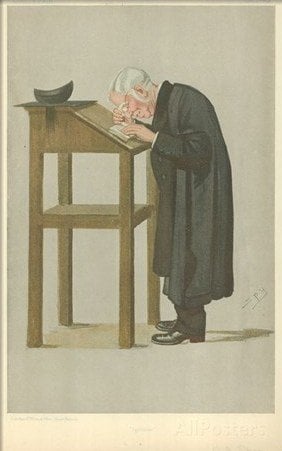
Reverend William Archibald Spooner
Although Spoonerisms are named after Reverend Spooner, who lived in the late 19th and early 20th centuries, the concept of transposing letters or sounds for humorous effect dates back much earlier. In this article, I’ve used the word ‘spoonerism’ because it is well understood now, and there wasn’t a specific word for this in the Regency. In the Regency era, word games and linguistic tricks were a common pastime, particularly in literary circles and social gatherings. These games allowed participants to showcase their cleverness and command of language, which were highly valued traits in polite society.
Spoonerisms often occurred unintentionally, as slips of the tongue, but they were also deliberately crafted for comedic effect. For example, saying ‘a well-boiled icicle’ instead of ‘a well-oiled bicycle’ would have been met with laughter and admiration for the speaker’s wit. These playful errors were a way to break the ice at social events and add a light-hearted touch to conversations.
The Role of Word Games in Regency Society
Word games were part of a broader tradition of linguistic entertainment in the Regency era. Parlour games, riddles, and puns were popular at social gatherings, providing a way for guests to engage with one another and demonstrate their intelligence and creativity. These games were especially appealing to the upper classes, who valued education and eloquence.
Spoonerisms, in particular, appealed to the Regency sense of humour, which often relied on clever wordplay and subtle wit. They were a way to poke fun at the pretensions of society while also showcasing one’s own linguistic skill. The ability to craft or recognise a Spoonerism was a mark of sophistication and a quick mind, qualities that were highly prized in Regency society.
The Legacy of Spoonerisms
While Spoonerisms are no longer a central part of social entertainment, they remain a beloved form of wordplay. They have influenced modern comedy and literature, appearing in everything from children’s books to stand-up routines. The enduring appeal of Spoonerisms lies in their simplicity and universality; anyone can appreciate the humour of a well-turned phrase, even if it is unintentionally mangled.
Conclusion
Spoonerisms were a delightful and clever form of entertainment in the Regency era, reflecting the period’s love for wit and wordplay. These linguistic quirks provided a way for individuals to showcase their intelligence and humour, while also adding a touch of levity to social interactions. Though the art of Spoonerisms has faded, their legacy lives on in the playful use of language.
References for Further Reading:
- Spoonerism
https://www.britannica.com/art/spoonerism - Spoonerism
https://en.wikipedia.org/wiki/Spoonerism